
Residential
What a real commercial rooftop check turns up
A Boise restaurant called about warm air at the front. The real finding was a carbon monoxide risk over the dining room, on two units at once.
Commercial
·
Diagnostics
Boise, ID
4 min
read
Cooling falling behind is usually a simple fix. When it is more than that, you want someone who will actually find it and tell you plainly.
The owner of a Boise restaurant called about one thing: the front of house was warm and the air conditioning was not keeping up. A comfort problem, and on paper a quick one.
What was actually on the roof was a safety problem, and it was the reason the visit mattered.
A crack you cannot see from the dining room
Both rooftop units serving that space had cracked heat exchangers. That single finding outranks everything else on the roof. A cracked heat exchanger can let combustion gases, carbon monoxide among them, bleed into the air the unit pushes down into a room full of staff and guests. It is not a monitor-it item. It is a shut-the-gas-off item, and we shut the gas off to both units and red-tagged them on the spot.
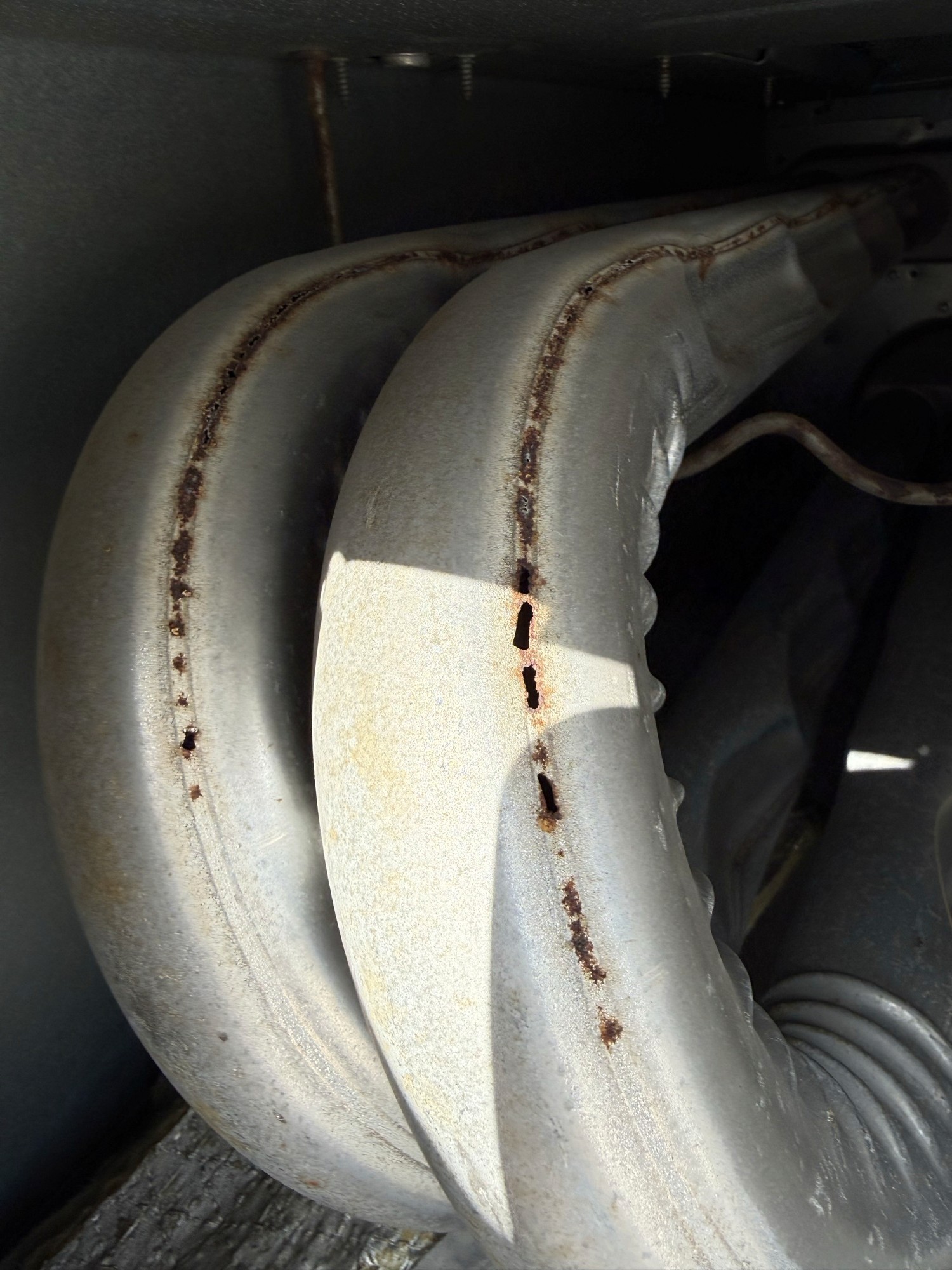
A cracked heat exchanger on one of the two rooftop units — rust has eaten a hole clean through the tube wall. This is why the gas was shut off.
Neither unit can run gas safely as it sits. Both are locked out for heat until the heat sections or the units themselves are replaced. A cracked heat exchanger is the one thing we will not leave running, not with staff and guests breathing that air. The lockout is on the heat side only; the cooling that still ran, we left running, so the restaurant kept its air conditioning. Everything beyond that safety line, we laid out as options for the owner to weigh on his own timeline. That is not the answer the owner called for. It is the answer the building needed, and it is one you only get if someone actually opens the units up and looks.
Why the easy version of this visit misses everything
The unit that was still cooling looked, from the dining room, like the whole problem was just weak air. Underneath, it was carrying a pitted contactor drifting toward failure, filters long past done, and an evaporator coil packed with drywall dust from construction in the space, choking the very heat exchange it exists to do. Its partner unit had been all but abandoned in place, still wired in and still leaned on, with a blocked supply trunk and worn drive parts. Both units drained badly because the condensate lines were not connected.

The rooftop packaged units serving the space, one of several problems a symptom-only visit would have left in place.
The newer make-up air unit on the roof was struggling too, rattling hard with a burning-electrical smell and a motor pulling more than it should. Another item the owner had no way of seeing from inside the building.
None of that triggered the service call. A visit that chases only the reported symptom, warm air at the front, closes the ticket and leaves every bit of it in place, including the cracked heat exchangers. The reported problem is rarely the whole problem. Finding the rest is the job.
One thermostat pretending to run two units
The space had been wired so a single downstairs thermostat drove both rooftop units in parallel, one of them used as a pass-through for the other's low-voltage wiring. On top of that, the thermostat itself was miswired, with a voltage drop pointing to a short in the line. The honest fix is not a patch: pull new low-voltage wire, retire the daisy-chained setup, and let each system stand on its own thermostat. We laid out that scope alongside cleaning the coil on the unit that runs, so the owner could decide with the full picture in front of him.
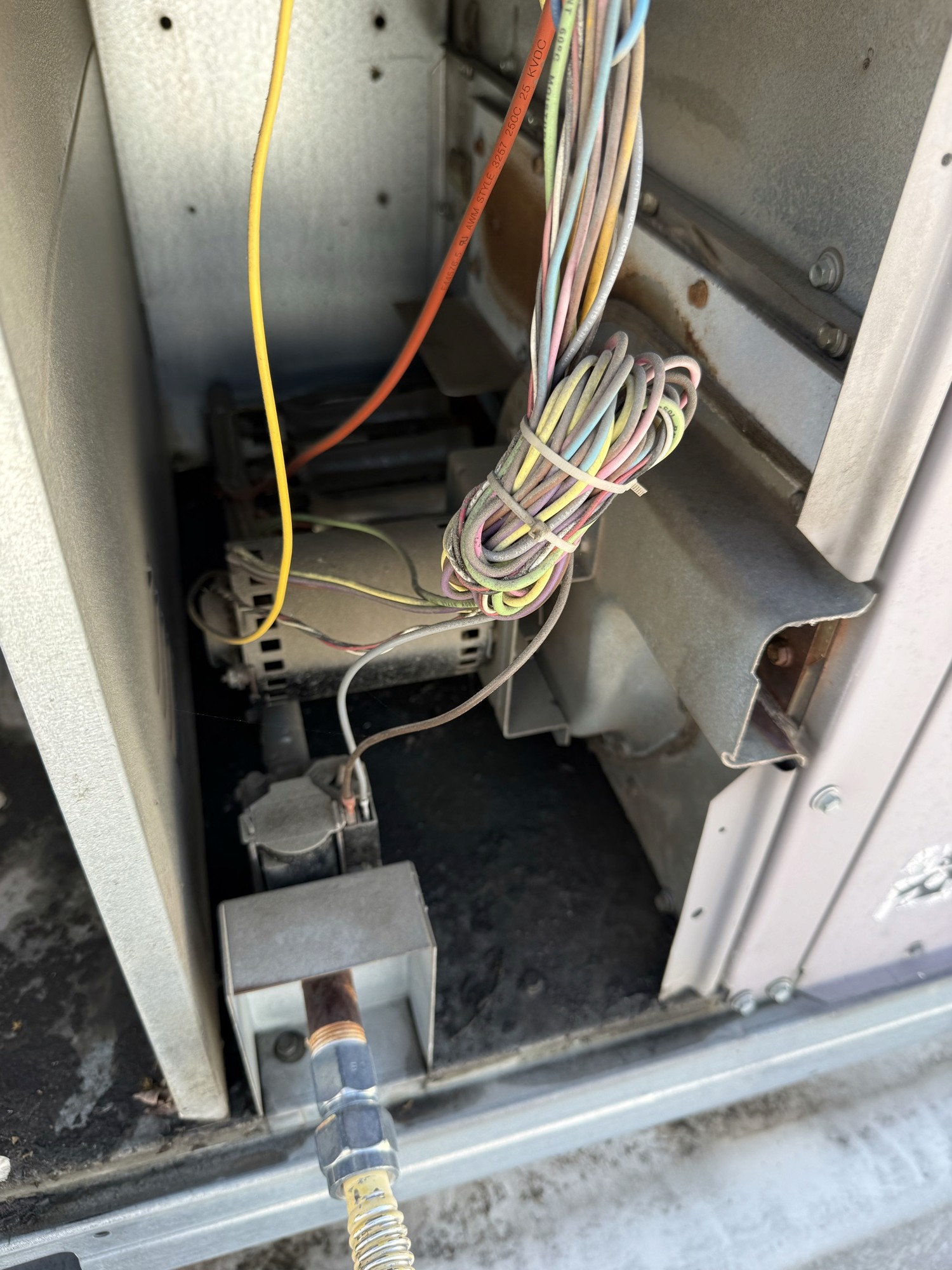
Low-voltage wiring daisy-chained so a single downstairs thermostat drove both rooftop units at once.
What the owner walked away with
Not a repair. A diagnosis he could trust: two units made safe, one running unit with a clear, honest scope of work before heating season, and a wiring plan that fixes the root instead of the symptom. He knew exactly what the building needed and why, including the part of the answer he was not braced to hear.
That is what a commercial diagnostic is supposed to deliver. Not the easy answer to the easy question. The whole truth about the equipment your guests and your staff depend on, given straight.
If you run a restaurant or commercial space in Boise or the greater Treasure Valley and you want to actually know what's on your roof, not just quiet the symptom you called about, that's the evaluation we do. Schedule one: (208) 203-3000.
This visit was one of the HVAC services we provide across the valley.
It is not a monitor-it item. It is a shut-the-gas-off item.
Northstead field notes, Boise
The result
Both units safe, and a scope he could trust
This visit did not end with a repair, and it was never going to. It ended with something a warm-air call rarely produces: the truth. Two rooftop units red-tagged and locked out so neither runs gas unsafely, one running unit with an honest scope of work before heating season, and a wiring plan that fixes the cause instead of the symptom. The owner left knowing exactly what the building needed and why.
Built for predictable performance
If your HVAC sounds or feels different than it used to
Northstead provides residential and commercial HVAC evaluation, repair, and predictive maintenance throughout Boise, Eagle, Meridian, and the greater Treasure Valley.
Bi-annual maintenance is recommended to identify component wear before it becomes a system failure.