
Residential
One bedroom had always been warm. Fixing a leak made it colder than ever.
Both air conditioners at one home were low on refrigerant, and one had been recharged before without the leak ever being repaired. We repaired both leaks the same visit.
Repair
·
Diagnostics
Boise, ID
4 min
read
The southeast bedroom was the warm one, every summer. The air conditioner serving it was leaking refrigerant.
If one room in your house never cools like the rest, the cause is usually measurable. At this Boise home it was a southeast bedroom that had always run warm. The owner asked for maintenance on both of the home's air conditioning systems and a look at that room.
Both systems were low on refrigerant. One leak the owner already knew about: that system had been recharged before, and the leak was never repaired. Oil residue at the outdoor unit confirmed it on sight. Escaping refrigerant carries a little oil with it, and the stain shows where it was getting out. The second leak was on the system serving the bedroom, at a cap on its service tee.
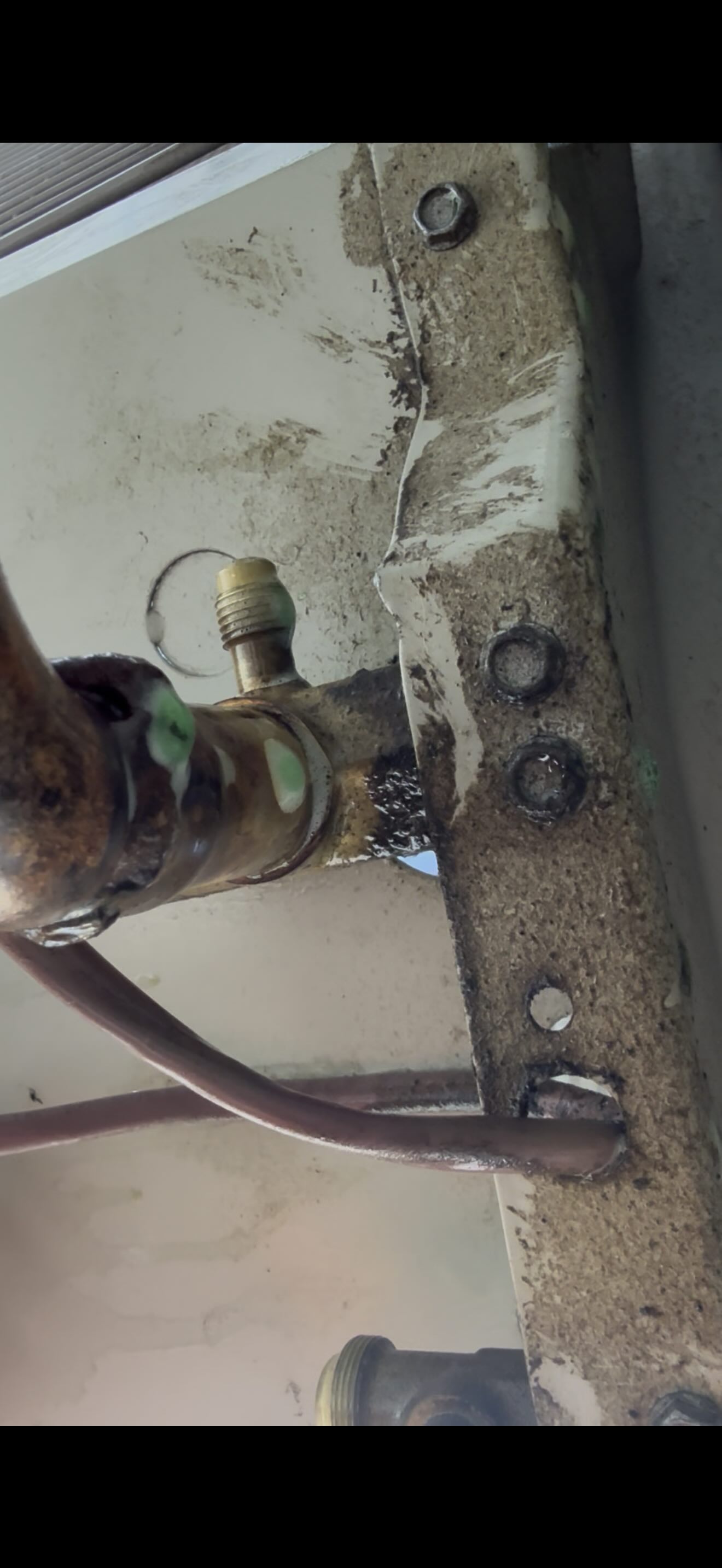
Refrigerant carries a little oil as it escapes. This joint, poorly brazed at install, is where it was getting out.
Refrigerant runs in a sealed loop, and a healthy system keeps the same charge for its whole life. When the level drops, the refrigerant went somewhere, and it will keep going there until the opening is closed. A recharge puts refrigerant back. It leaves the opening alone.
Here's what repairing the first leak involved. We recovered the full refrigerant charge, because you can't work on a pressurized line. The leak sat at a service tee connection on the suction line, at a joint that was poorly brazed when the system was installed. We repaired the joint, then pressure tested the sealed system with nitrogen at 350 psi for 30 minutes. No pressure loss.
Then a triple evacuation: pull the system into a deep vacuum, break it with dry nitrogen, and pull it down again, three times over, finishing near 460 microns. The vacuum boils off any moisture inside the lines and the nitrogen sweeps it out. We held that vacuum for a 30 minute decay test, and it rose 1 micron. The system was tight and dry. Only then did refrigerant go back in, weighed to the factory charge with an allowance for the line length, and the system was commissioned to the manufacturer's subcooling target.
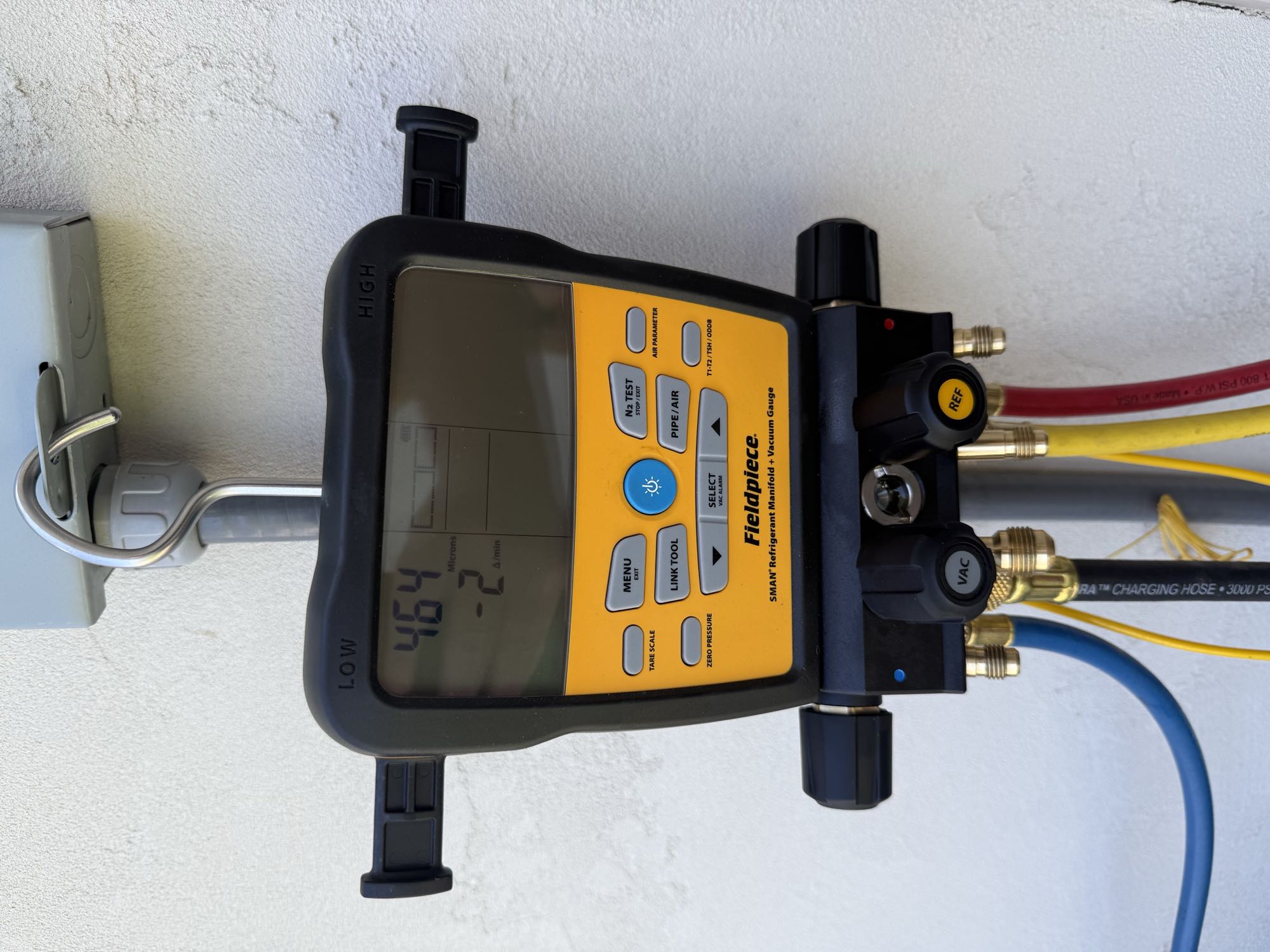
The decay test after the repair, holding in the mid-400s.
That's why a leak repair costs more than a recharge. A recharge takes a gauge set and a jug. A repair takes recovery, a fix at the source, a pressure test, a deep vacuum, and a weighed charge. The repair ends the problem. The recharge buys time until the level drops again.
Shortcuts around refrigerant work can hide for years. At another home this season, we traced weak cooling to an expansion valve that had been damaged during the original installation. Instead of replacing the valve, refrigerant had been added until the temperature readings looked normal. The system cooled. It also left the compressor doing roughly twice the work it was built for. The owners have the full picture now, along with their options, and the timeline is theirs.
The second system's leak was simpler. We repaired the leaking cap and corrected the charge the same visit. Then we went through the warm bedroom. The room had two dampers in its ductwork and one was closed all the way, so we opened it. We also inspected the ductwork under the house and found every run connected and sealed. The room's problem was a closed damper and a low charge, and both were corrected the same day.
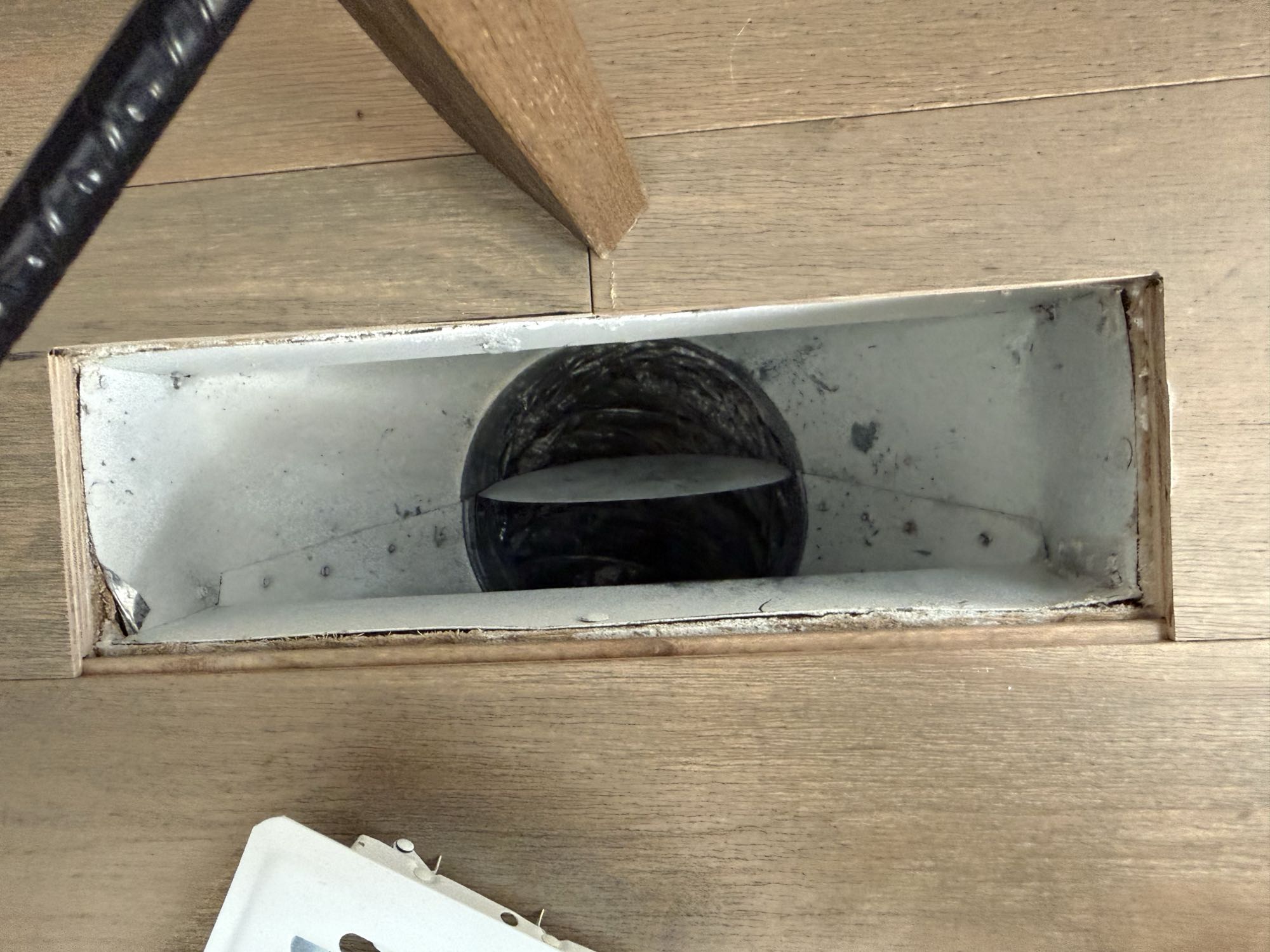
Inside the bedroom's floor duct: the damper that was closed all the way.
Both systems left that visit holding their factory charge and cooling the way they were built to. Even the kids agreed their room had never felt colder.
If your air conditioner has been recharged before, or one room in your house never quite cools, schedule an evaluation. We find the leak, repair it, and prove the repair before the refrigerant goes back in. Northstead serves Boise, Eagle, Meridian, Star, Garden City, Kuna, and the greater Treasure Valley. Call or text (208) 203-3000.
The result
Both leaks repaired. The bedroom is colder than ever.
Both systems left the visit holding their factory charge, tested under pressure and under vacuum before any refrigerant went back in. The bedroom register that had never kept up now blows air in the mid-50s, cold enough that even the kids agreed the room had never felt colder. The same visit caught the closed damper, so the room gets the airflow it was built for as well as the cooling.

Built for predictable performance
If your HVAC sounds or feels different than it used to
Northstead provides residential and commercial HVAC evaluation, repair, and predictive maintenance throughout Boise, Eagle, Meridian, and the greater Treasure Valley.
Bi-annual maintenance is recommended to identify component wear before it becomes a system failure.