
Residential
Your AC produces water. Where it goes was decided at install.
A Boise homeowner found water on the basement floor, and the plumber he called told him it wasn't the water heater. The air conditioner's condensate drain had been built undersized 24 years ago, and it had finally closed.
Diagnostics
·
Repair
Boise, ID
5 min
read
On a hot afternoon, the air conditioner in your house is pulling gallons of water out of the air. All of it has to leave through one drain line most people have never seen. A Boise homeowner found water on his basement floor, and the plumber he called told him it wasn't the water heater.
On a hot afternoon, the air conditioner in your house is pulling gallons of water out of the air. Not metaphorically. Actual liquid water, condensing on a cold coil inside your furnace cabinet, running down into a pan.
All of it has to leave the house through one drain line. Most people have never seen it and couldn't tell you where it goes.
A Boise homeowner found water on his basement floor, and the plumber he called told him it wasn't the water heater.
It was the air conditioner.
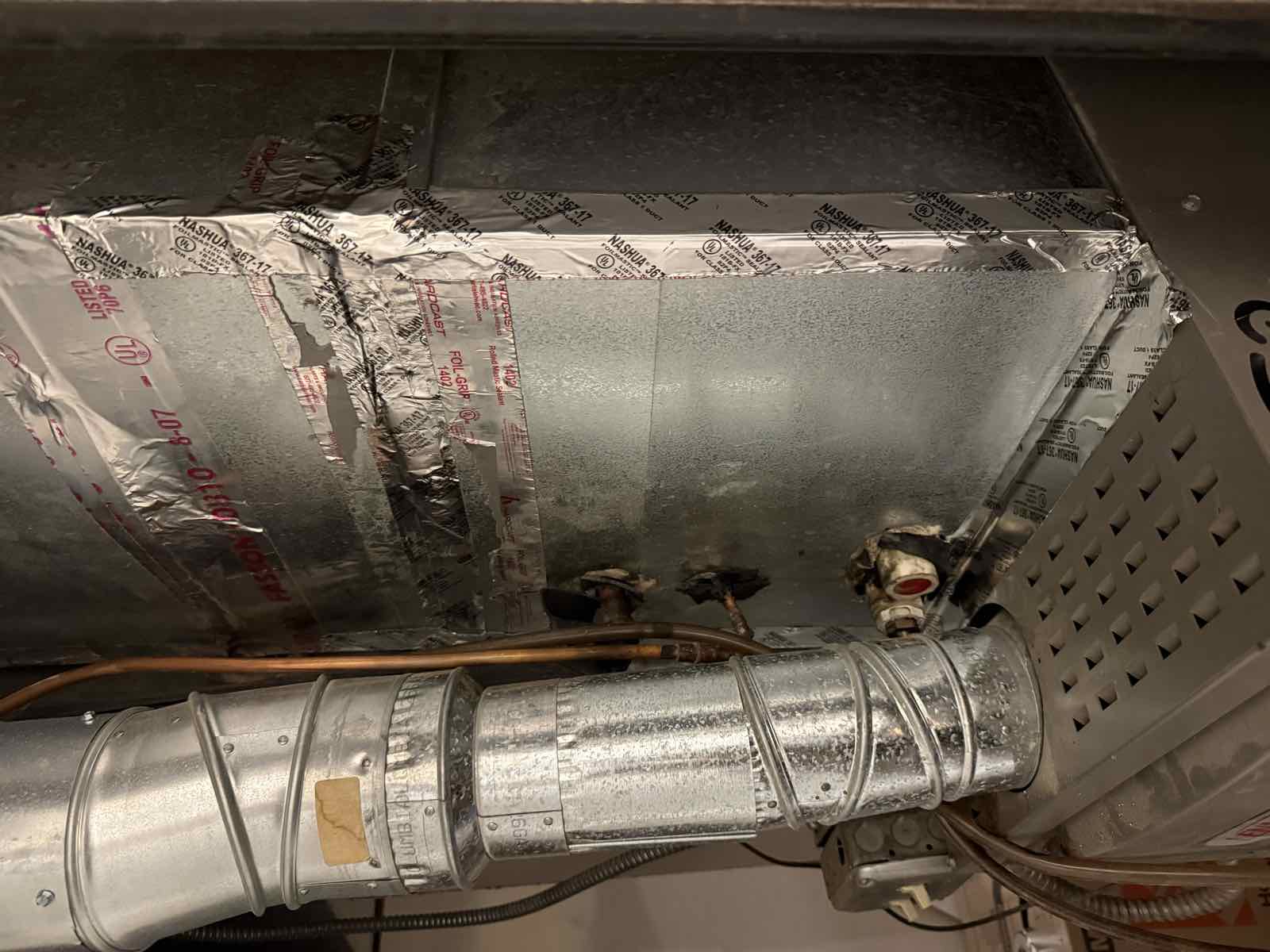
The original condensate drain, as we found it.
The drain was built too small at install
The equipment leaves the factory with a three-quarter-inch drain outlet. That size isn't decoration. It's what the manufacturer determined the system needs to move the water it produces.
Whoever installed this system stepped it down immediately. Three-quarter inch to a three-eighths-inch barbed fitting, then soft poly tubing from there, running alongside the furnace vent to a pump in the corner.
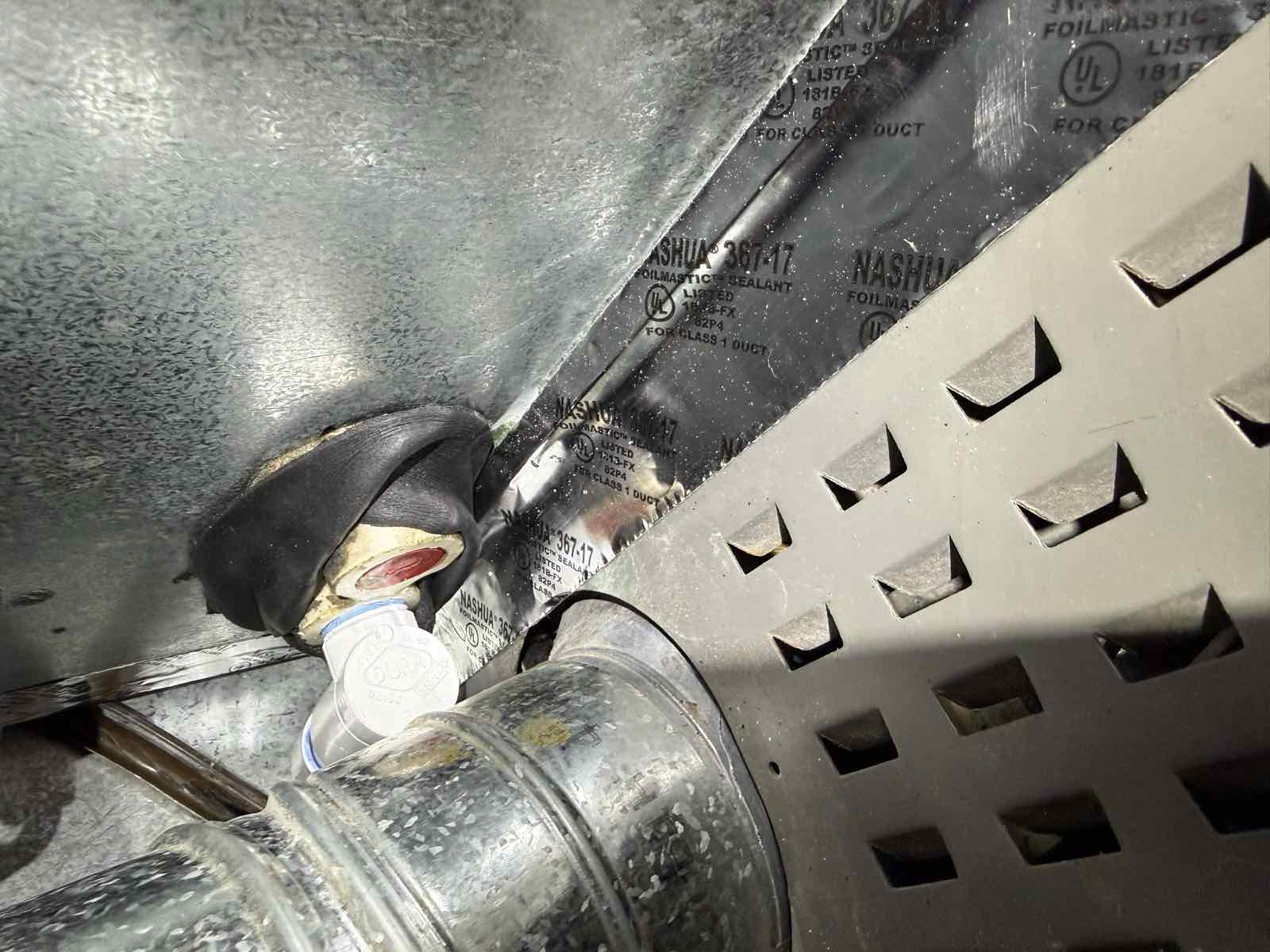
The original fitting. A three-quarter-inch outlet reduced to a three-eighths-inch barb, sealed with mastic.
That was 24 years ago. It has been slowly closing ever since.
Why a small drain doesn't stay a small drain
Narrow line, slow water. Slow water is how biofilm grows — the soft organic slime that builds inside any wet pipe that isn't moving briskly.
Biofilm makes the line narrower. A narrower line moves water slower. Slower water grows more biofilm.
It doesn't fail on a particular day. It closes gradually, over years, until one afternoon it can't keep up with what the coil is producing. The pan fills. And the water goes where water goes when the drain won't take it.
Nothing broke
This is the part worth sitting with.
There was no failed part in this house. No cracked component, no worn-out motor, nothing that gave out. Every piece of that air conditioner was doing exactly what it was built to do, including producing water.
The drain simply was never big enough to carry it away. It worked for years because a new pipe is a clean pipe. It stopped working because pipes don't stay clean.
Some problems aren't failures. They're the install catching up with you.
And you cannot diagnose that by looking at what broke, because nothing did.
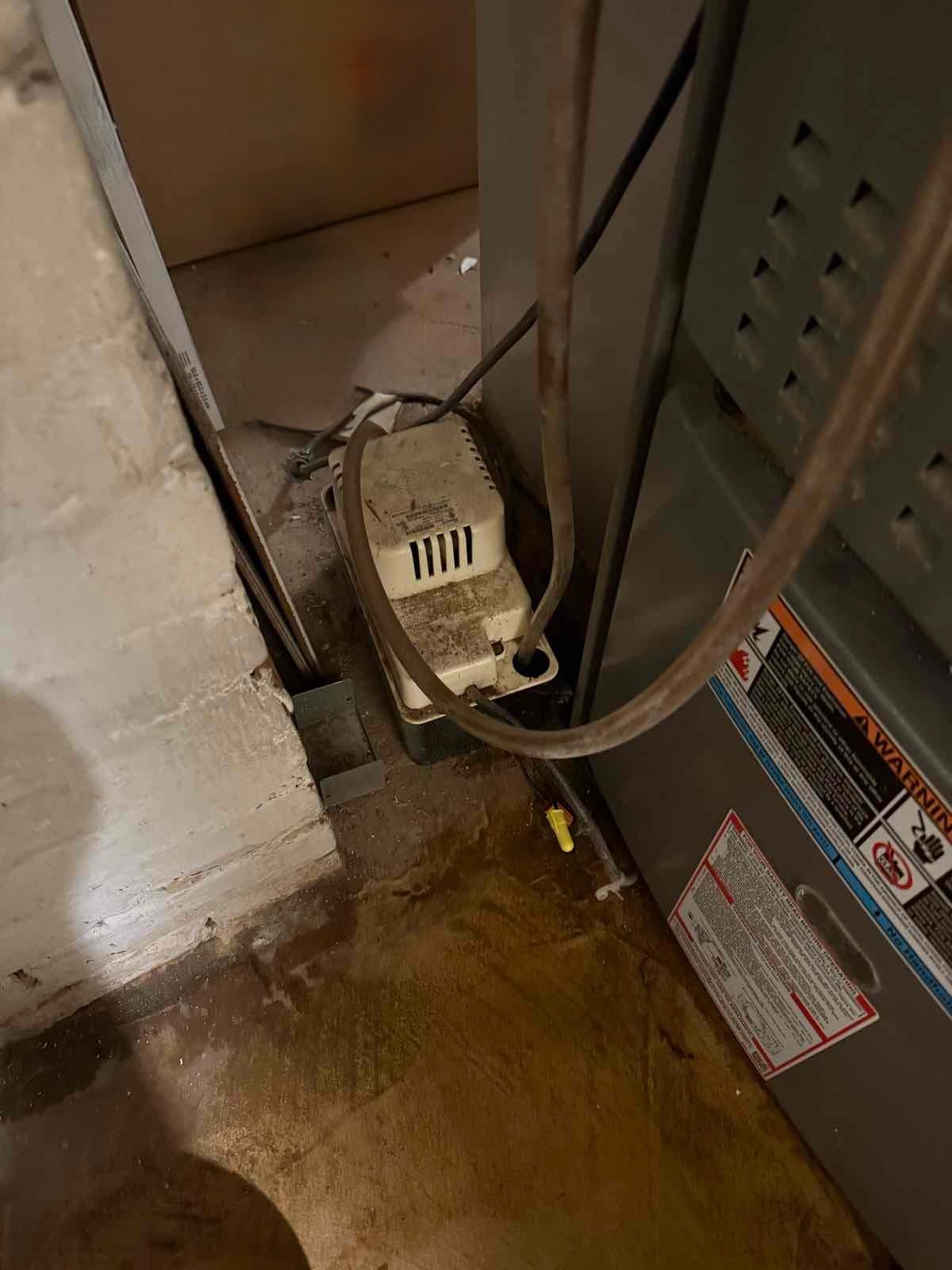
The condensate pump, and the floor around it.
What we actually rebuilt
We put the drain back to the size the equipment was designed for. Three-quarter inch, from the outlet, with real fall in it — pitched so gravity moves the water instead of hoping it makes the trip.
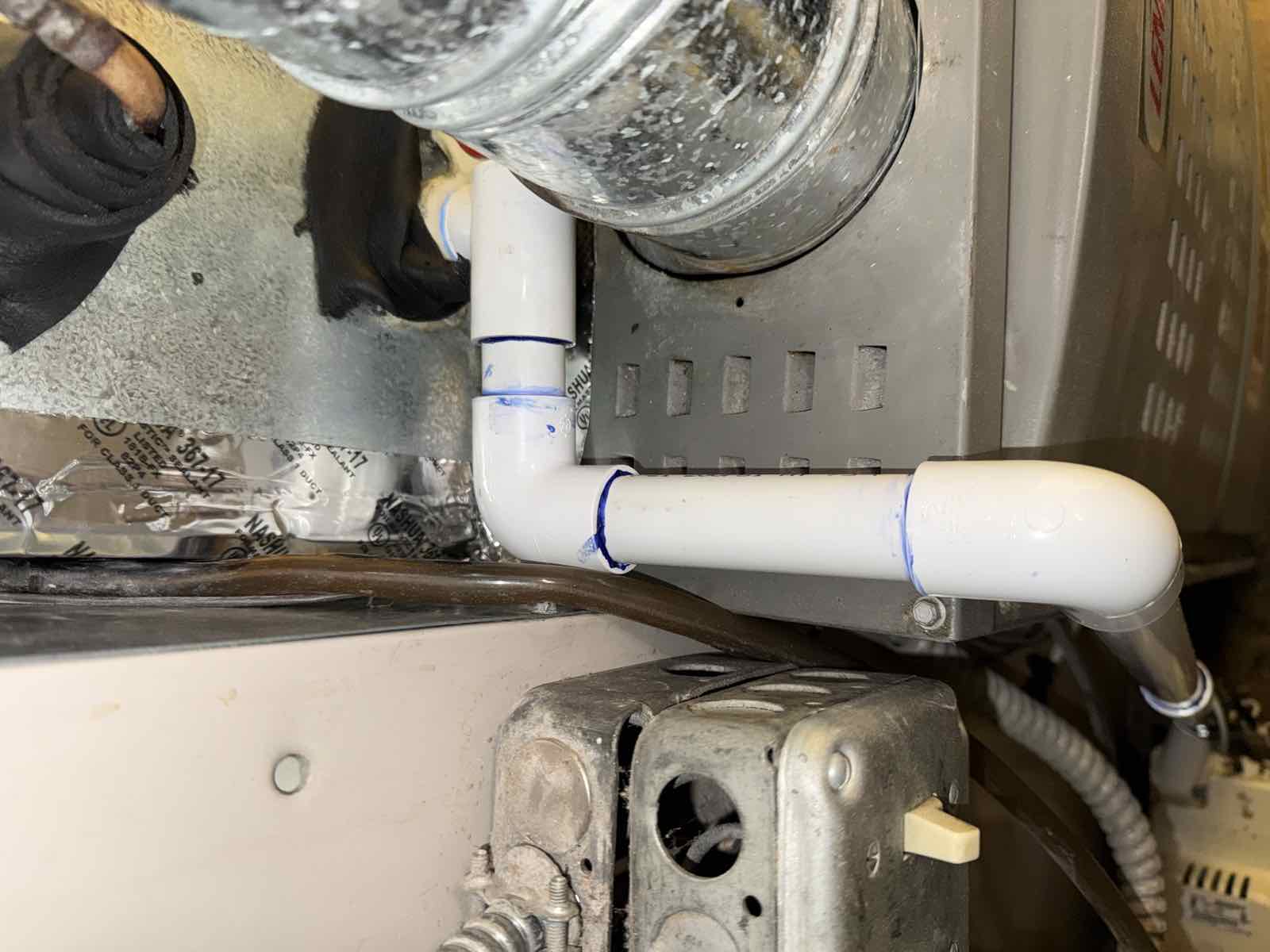
The same corner, rebuilt in three-quarter-inch PVC with fall.
We cleared and sanitized the evaporator coil, the pan, and the line, and treated the whole path so the biofilm doesn't come straight back.
We rerouted the drain away from the furnace vent. The old poly tube had been run right against it, and heat makes soft tubing brittle. That's a second failure waiting on a schedule.
Then we rebuilt the condensate pump. Cleaned it, cleaned the float, sanitized it, tidied the electrical. And we wired the float switch in — so if that pump ever does fail, it shuts the air conditioner off instead of quietly filling a basement.
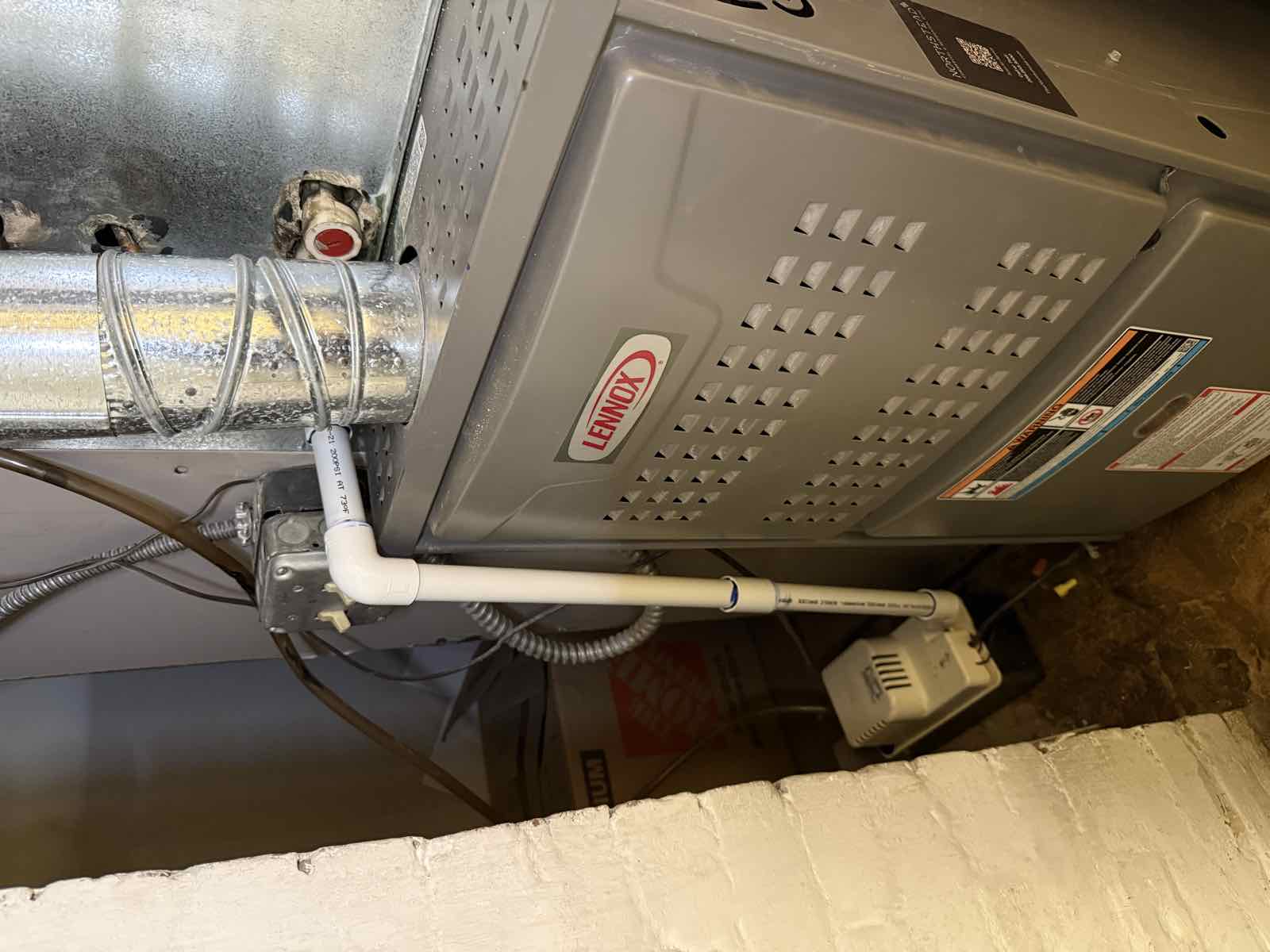
The finished drain, from the coil to the pump.
The part where we didn't sell him an air conditioner
The system is 24 years old. It runs on R-22, a refrigerant that hasn't been produced in years. It is past its service life by any measure, and every one of those facts was sitting right there while we worked.
The machine still runs. With maintenance it can keep running for a while yet.
So we laid out the range of what's worth considering when he's ready to think about it, without a quote attached and without a deadline on it. He'll decide when he decides. In the meantime we're maintaining it, and we'll be back in the fall.
The condensate leak was a real problem and it's fixed properly. The rest is his call, on his timeline.
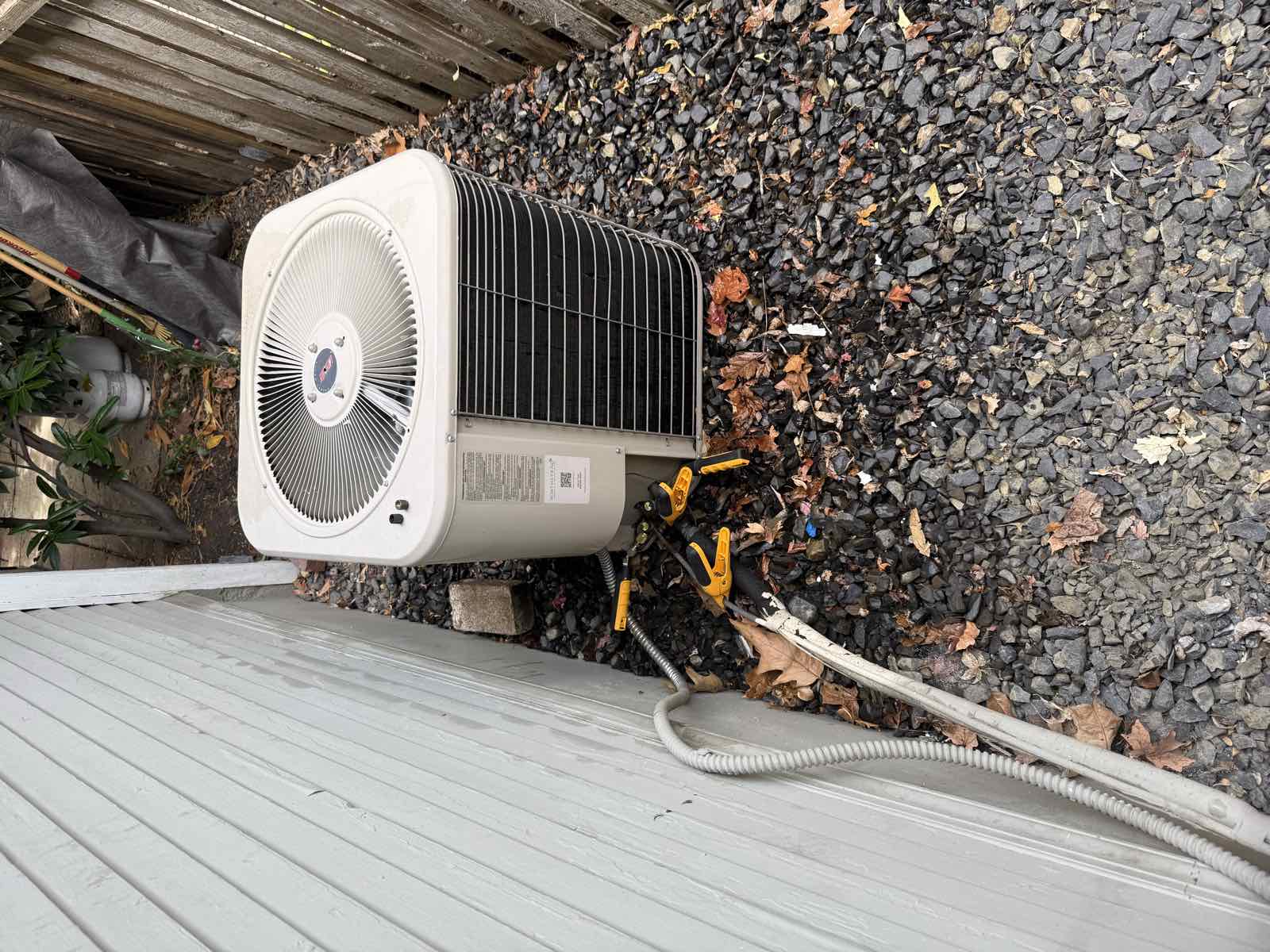
The outdoor unit. 24 years old, and still running.
What this looks like at your house
You will probably never see this drain. That's fine. But there are three things worth knowing:
Water near the furnace or air handler is never normal, and it is not always a plumbing problem.
A drain that's been reduced from the size the manufacturer specified is a slow clock, not a stable condition.
And a system that's been running fine for two decades can still be carrying an install decision that was wrong from day one.
Nothing broke. The drain was never big enough.
A Boise condensate drain, 24 years after install
The result
Draining the way the equipment was designed to drain
We rebuilt the condensate drain in three-quarter-inch, the size the manufacturer specified, with proper fall. We cleared and sanitized the coil, the pan, and the line, rerouted the drain away from the furnace vent so heat can't make it brittle, and rebuilt the condensate pump. We wired in the pump's float switch, so a pump failure now shuts the system down instead of flooding the basement.

Built for predictable performance
If your HVAC sounds or feels different than it used to
Northstead provides residential and commercial HVAC evaluation, repair, and predictive maintenance throughout Boise, Eagle, Meridian, and the greater Treasure Valley.
Bi-annual maintenance is recommended to identify component wear before it becomes a system failure.