
Residential
When the Walls Move, the Air Has to Move With Them
A remodel moves the walls, the island, the doors. The airflow has to move with them. How we reshaped a Boise home's heating and cooling from inside the build.
Remodel
·
Ductwork
·
Diagnostics
Boise, ID
4 min
read
A remodel is exciting. The part behind the walls is easy to forget, and on a Boise project, it's the part we were there to get right.
A remodel changes more than you can see
A remodel is exciting. New kitchen, opened-up living space, a layout that finally fits how you live. What's easy to forget in all of that is the part behind the walls: the airflow, heating, and cooling that has to be reworked to match the new floor plan.
When walls move, the air no longer fits the way it used to. A return that made sense in the old layout now sits in the wrong place. A supply register lands where a new door swings into it. The island goes in over a vent. None of it shows on a finish schedule, and all of it matters once the family moves back in.
Left for the end, it gets expensive
The cost of skipping the airflow isn't usually a dramatic failure. It's a series of small, livable-with frustrations that add up: a register a door opens into, one tucked under new cabinetry, a back bedroom that never quite cools because the airflow was never reworked for the new shape of the house.
Caught during the build, these are simple corrections, made while the walls are open and the framing is exposed. Found after the walls close, the same fixes mean opening them back up. That's the case for treating the air as part of the remodel plan from the start, not something bolted on at the end.
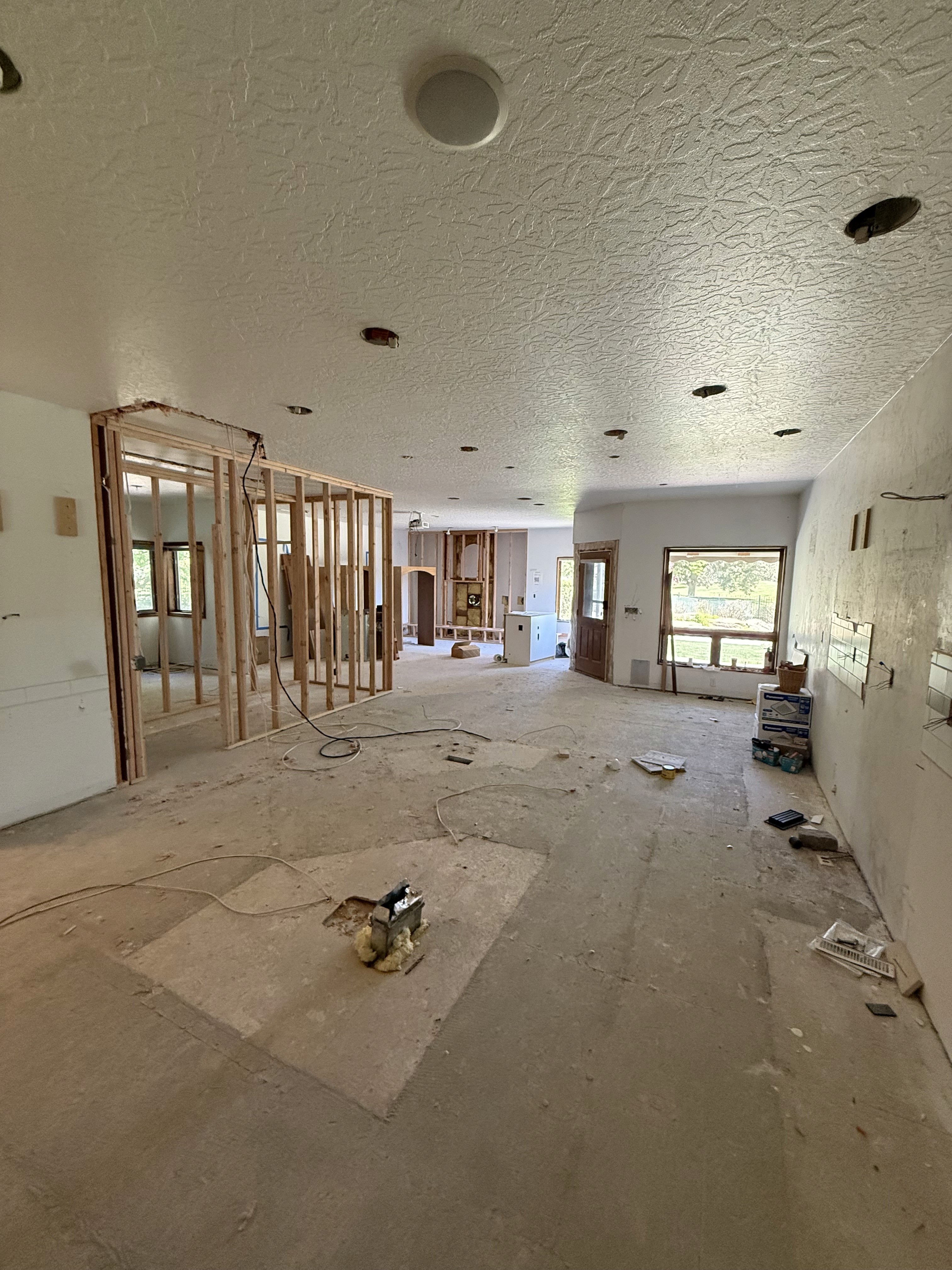
A remodel in progress, with framing open and the airflow reworked before the walls close.
Built to fit the new floor plan
On a recent Boise remodel, we worked alongside the builder from inside the project, reshaping the air as the new layout took form. Much of that work is custom fabrication, not parts pulled off a shelf. We built transitions and sleeves to carry returns and supplies to where the new plan needed them, extended a return up through a ceiling, and rerouted others into a newly framed hallway.
Placement was deliberate, room by room. A bathroom register was set so it clears the door swing and doesn't blow directly on anyone using the room. Supply registers were moved out of doorways and out from under the new island, so no one steps on them and nothing sits buried under cabinetry. Small decisions, but they're the difference between a remodel that looks finished and one that feels right to live in.

A custom sheet-metal transition fabricated to fit the new framing.
Keeping the house in balance
The new kitchen called for a powerful range hood. A hood that strong can pull air out of a house faster than it naturally comes back in, which leaves the home short of air and can affect how everything else runs. The fix is a dedicated makeup-air path: a way for fresh air to come back in at the same rate the hood pulls it out.
We built that path from the outside in. A new intake on the exterior wall, screened against pests and controlled by a damper, feeds hard-piped duct routed under the home to a discreet toe-kick vent near the island. The result is a kitchen that vents the way it should and a house that stays balanced while it does it.
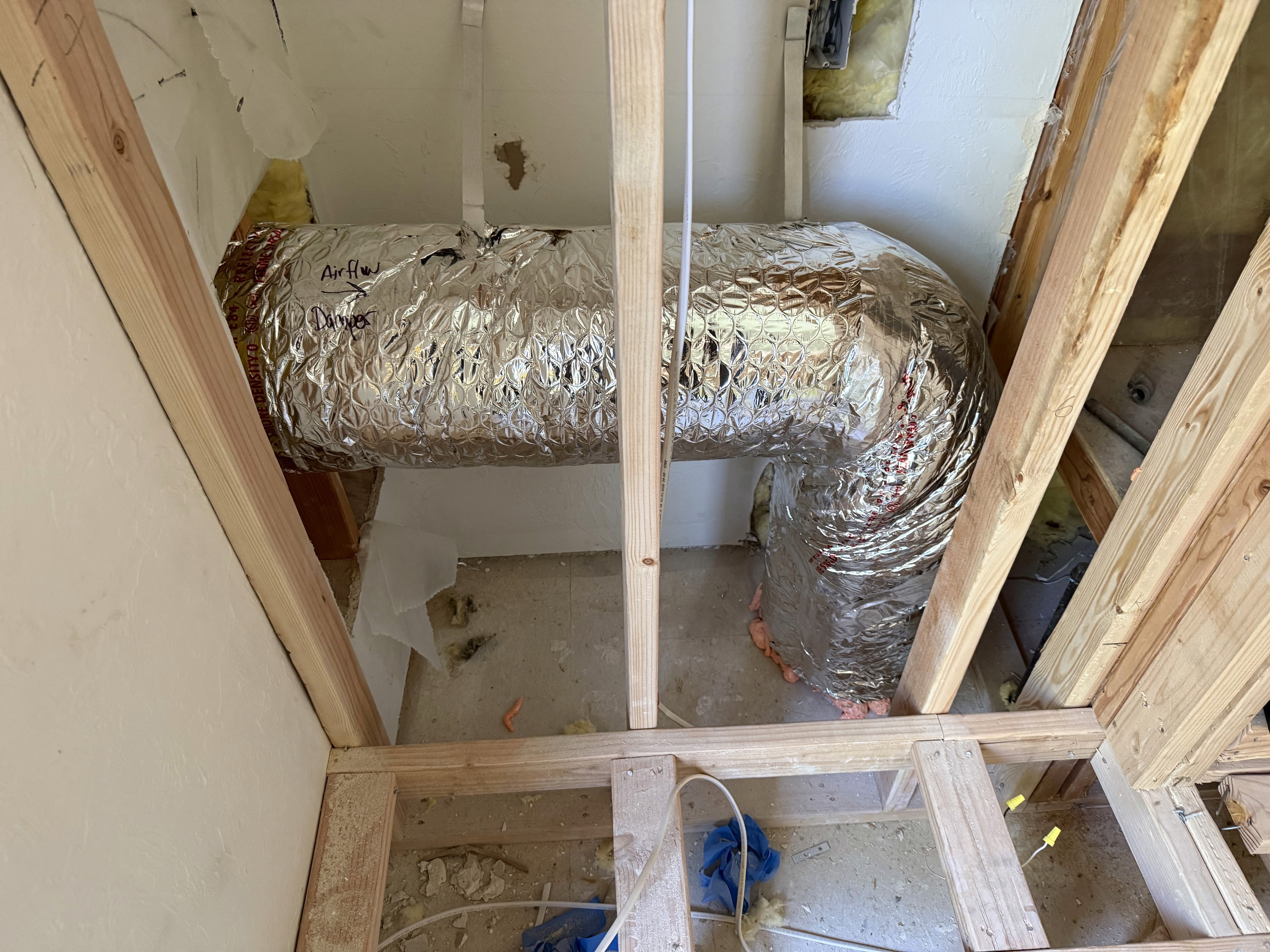
The insulated makeup-air duct routed through the new framing.
A zoned system, back in tune
The home's smart thermostat had stopped working during the build, and the zoned controls behind it had been left disorganized by earlier work on the project. We tested the thermostat against what it should have been reading, confirmed the unit itself had failed, and replaced it with the correct model, run on the shielded wiring the manufacturer specifies.
From there we cleaned up the zone wiring, retuned the controls, and tested heating and cooling across every zone. The system now responds the way it should in each part of the home, room by room, instead of fighting itself. It passed inspection, and it runs the way a zoned system is supposed to.
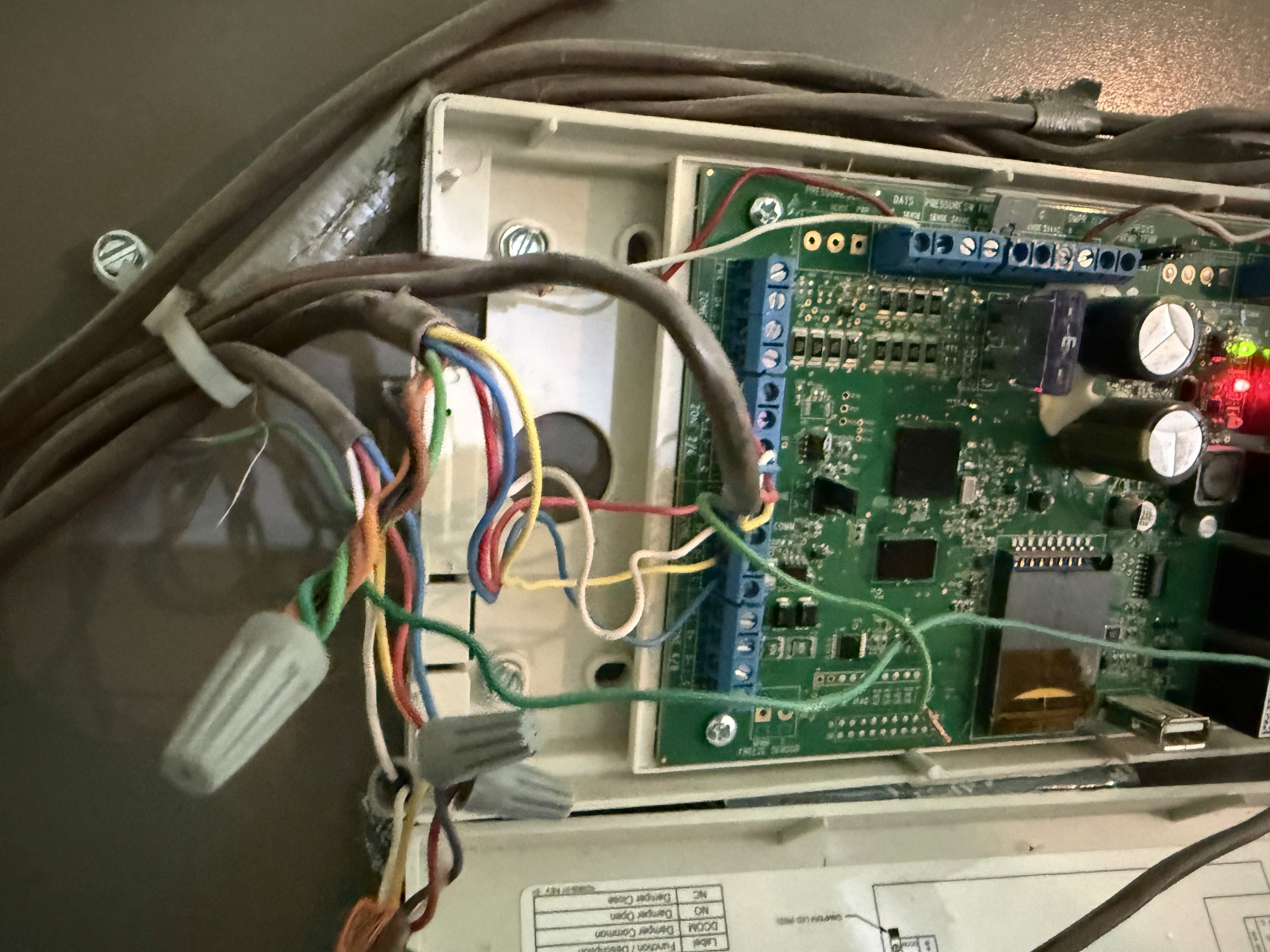
The zoned control board, rewired and retuned.
The case for bringing HVAC into the plan
The through-line of this project is simple: the air was designed into the remodel, not worked around after it. That's the position we'd make to anyone planning one. The heating, cooling, and airflow are infrastructure, and infrastructure is far cheaper and far better when it's part of the plan from the start.
If you're remodeling, the best time to think about the air is while the walls are still open. Bringing us in alongside your builder means the system is shaped for the home you're building, not retrofitted into it once everything's closed up.
Designed into the project, not worked around after.
The result
Built in, not bolted on
The airflow was reshaped to fit the new floor plan, the home kept in balance for its new kitchen, and the zoned system brought back in tune, all while the walls were still open. The project passed inspection and the home runs the way the remodel intended.
Built for predictable performance
If your HVAC sounds or feels different than it used to
Northstead provides residential and commercial HVAC evaluation, repair, and predictive maintenance throughout Boise, Eagle, Meridian, and the greater Treasure Valley.
Bi-annual maintenance is recommended to identify component wear before it becomes a system failure.