HEATING & COOLING · TREASURE VALLEY · IDAHO
HVAC repair, maintenance, and installation -
trusted across the Treasure Valley
AC repair, furnace repair, maintenance, and installation for homes and commercial properties across Boise, Eagle, Meridian, and the greater Treasure Valley. When everything's working the way it should, you stop noticing it. That's the goal.
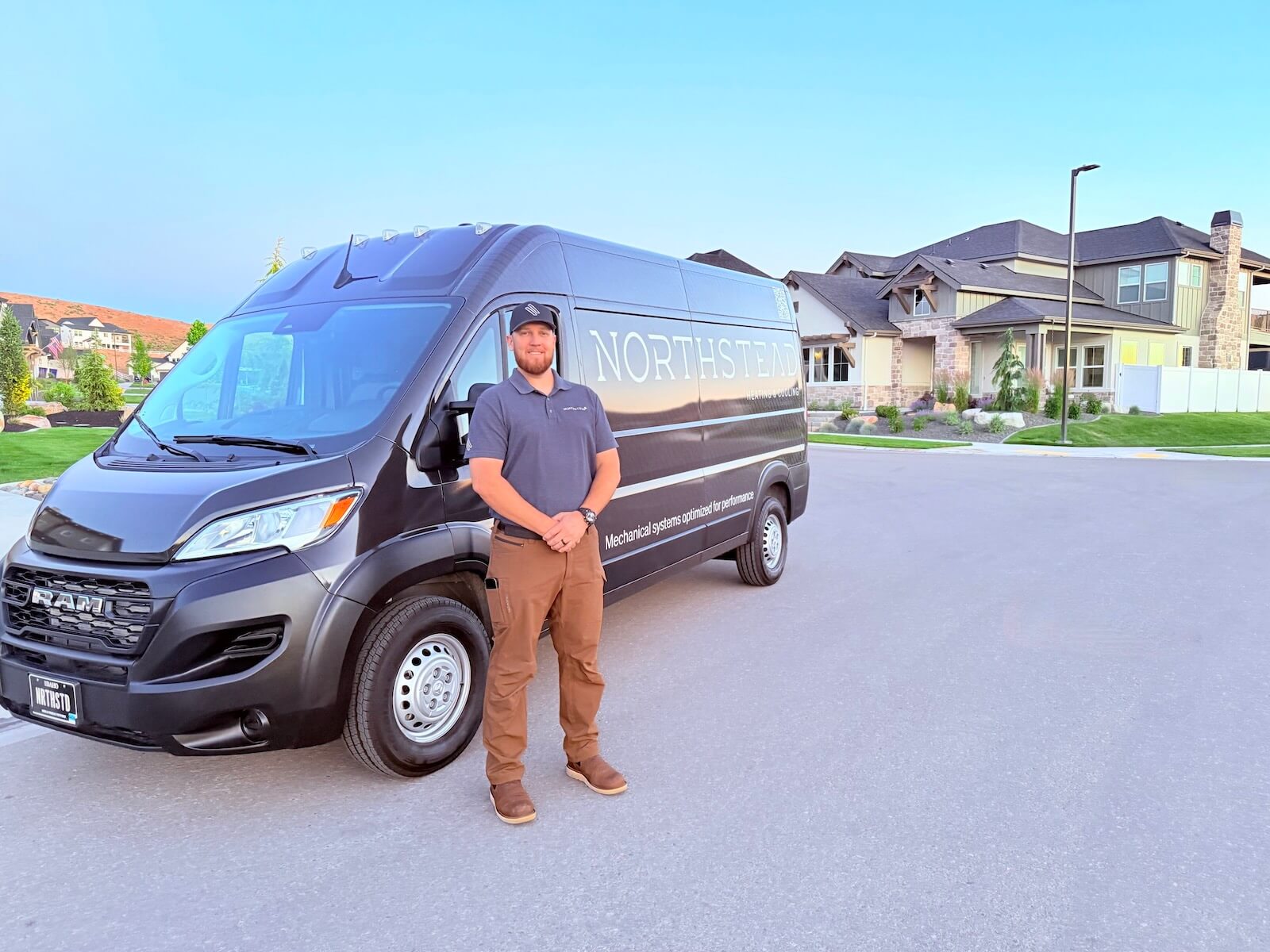
Each of these points to something specific. A system that struggles is rarely worn out. More often something is limiting it: airflow, charge, controls, or a decision made the day it was installed. We measure to find it, then correct it. It's fixable.
Call (208) 203-3000One partner for heating, cooling, and air quality
★★★★★ 5.0 on Google
✓ Open 7 days a week
✓ Same-day scheduling
✓ Pricing explained before any work


Evaluate. Diagnose. Optimize.
Evaluate
We inspect the whole system, not just the obvious part, and measure how it's actually performing: charge and superheat, static pressure, airflow, electrical components under load, both coils.
Diagnose
You get the real cause in plain language, with pricing explained before anything is touched. You keep a Northstead Visit Summary with every reading and recommendation in it.
Optimize
You get the whole picture: what needs doing now, what can wait, and what it costs, in good, better, and best options. You choose the order and the timeline.
Eagle · Boise · Meridian
Serving the Treasure Valley
Same day
SCHEDULING AVAILABLE
Quick Answers
How much does HVAC repair cost in Boise?
Do you service both heating and air conditioning?
What areas do you serve?
Another company told me I need a new system. Will you give a second opinion?
Do you work on commercial and multi-property systems?
What do I get after a visit?
What is Condenser Restoration?
Do you help with indoor air quality?
The work is ours. The PEACE OF MIND is yours.
Find out what's actually wrong.
Then decide.
Tell us what you've noticed. We measure first, explain it plainly, and tell you the truth about what your system actually needs. You choose the path forward.