
Residential
Your AC Is Making Noise and Dimming Your Lights. Here's What That Means.
A routine-sounding call that turned up a component on its way out, caught before it became a problem in the middle of summer.
Diagnostics
·
Repair
·
AC
Meridian, ID
5 min
read
When your air conditioner kicks on and the lights dim, it's easy to assume it's just something the house does. It's worth a closer look. A Meridian homeowner called us about exactly that: the AC had gotten loud, and the lights flickered every time it cycled on. This is the story of a routine-sounding call that turned up a component on its way out, caught before it became a problem in the middle of summer.
When we asked when the system had last been serviced, the homeowner wasn't sure. They'd changed the filter themselves, but the system hadn't been serviced since it was installed.
Loud operation, hard starts, and no service history is a combination worth taking seriously. We scheduled the visit, went out to the Meridian property, and ran a structured evaluation of the system rather than assuming the cause.
A different technician might have noted the system was running, cleaned it up, and moved on. Here's what that would have missed.
The Diagnosis: Testing the Capacitor Directly
We don't diagnose by guessing. The run capacitor is the component that gives the compressor and fan motors the electrical push they need to start and run smoothly, and it's one of the most common parts to degrade over time.
We pulled the capacitor leads and tested the component directly against its rated specification. The reading came back well outside the acceptable 5% tolerance on its microfarad rating. It wasn't a borderline result. The capacitor was clearly degraded and due for replacement before it failed outright.
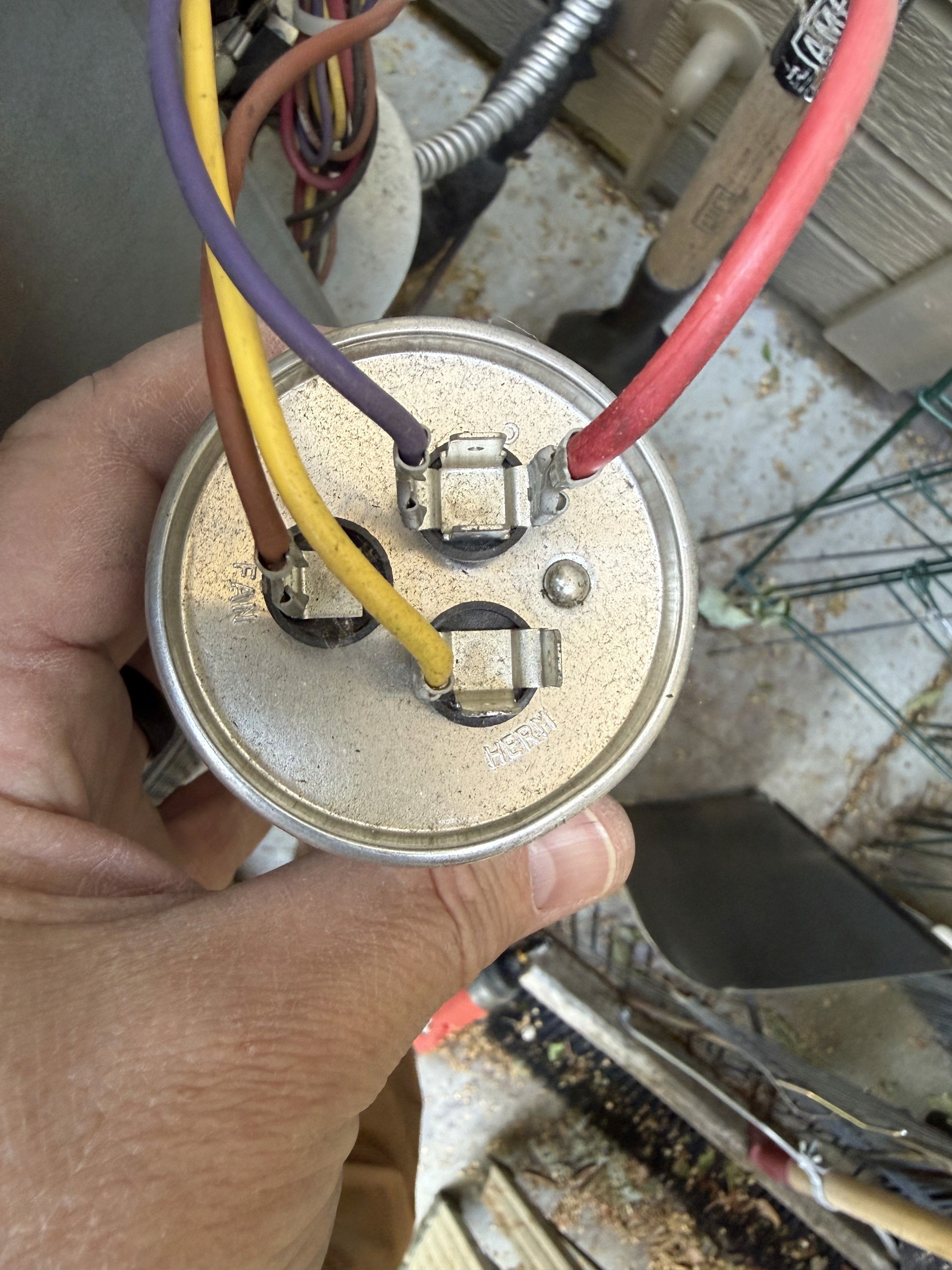
We documented the reading, explained the finding to the homeowner, and recommended replacement. They agreed, and we installed a new capacitor.
What Else We Found and Corrected
A capacitor replacement was the headline, but it wasn't the only thing we addressed on the visit.
The condenser coil had accumulated enough dirt to restrict airflow and reduce efficiency, so we cleaned it. We tightened the hardware throughout the unit. And we tracked down the rattle the homeowner had been hearing: the thin sheet-metal cabinet was vibrating against the pad. A set of rubber isolation feet under the unit dampened that contact and eliminated the noise.
We then ran the system through multiple cycles and took our measurements to confirm it was operating correctly. The lights stopped dimming on startup. The noise was gone.
The Homeowner's Takeaway
The homeowner said the system was performing well, and plans to schedule a furnace inspection this fall.
That follow-up matters. A system that hasn't been serviced since installation has years of deferred maintenance behind it. The capacitor was the most pressing finding on this visit, but a system on a regular maintenance schedule catches these things before they turn into symptoms a homeowner notices from the living room.
Why This Visit Matters
A loud AC and dimming lights are easy to dismiss, and easy to use as a reason to push a larger, more expensive proposal. We did neither. We measured the system, found the specific component that was failing, and replaced it. The compressor is in good condition and the system has years of service life ahead of it.
Catching a worn capacitor at this stage is the difference between a straightforward repair visit and a more disruptive call during a summer heat event. That's what structured diagnostic service is for.
We measured the system, found the specific component that was failing, and replaced it.
The result
The noise stopped. The lights held. The compressor has years left.
The capacitor tested well outside its rated tolerance and was replaced before it failed outright. We cleaned the condenser coil, tightened the hardware, and set the unit on isolation feet to kill the rattle. The system ran clean through multiple cycles, no dimming on startup, no noise.

Built for predictable performance
If your HVAC sounds or feels different than it used to
Northstead provides residential and commercial HVAC evaluation, repair, and predictive maintenance throughout Boise, Eagle, Meridian, and the greater Treasure Valley.
Bi-annual maintenance is recommended to identify component wear before it becomes a system failure.